It always seems to happen on the coldest night of the year. The house feels chilly, you check the
thermostat, and the furnace is either silent or blowing cool air. In Calgary, where winter temperatures
can drop past −30°C and chinooks swing the weather back and forth, furnaces work harder than in most
of Canada. Small problems that go unnoticed in October often show up as a no-heat call in January.
The good news is that many furnace problems have simple causes. Before you call for service, a few safe
checks can save you time and sometimes the cost of a visit. This guide walks through what to check,
what the warning signs mean, and when it is time to call a licensed gas fitter.
- Start With the Thermostat and Power
It sounds too simple, but thermostat settings cause a surprising number of no-heat calls. Make sure the
thermostat is set to Heat, not Cool or Off, and that the set temperature is at least a few degrees above
the current room temperature. If the fan is set to On instead of Auto, the blower will run constantly and
push cool air between heating cycles, which feels like the furnace is broken.
If your thermostat runs on batteries, replace them. A blank or flickering display is a common sign. For
smart thermostats, check whether a schedule or away mode has lowered the temperature.
Next, confirm the furnace has power. Most furnaces have a switch that looks like a regular light switch
on or near the unit, often mounted on the wall or a nearby joist. It is easy to bump off while moving
boxes in the basement. Also check your electrical panel for a tripped breaker labelled “furnace.” - Check the Furnace Filter
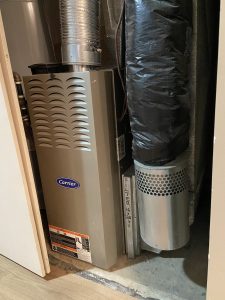
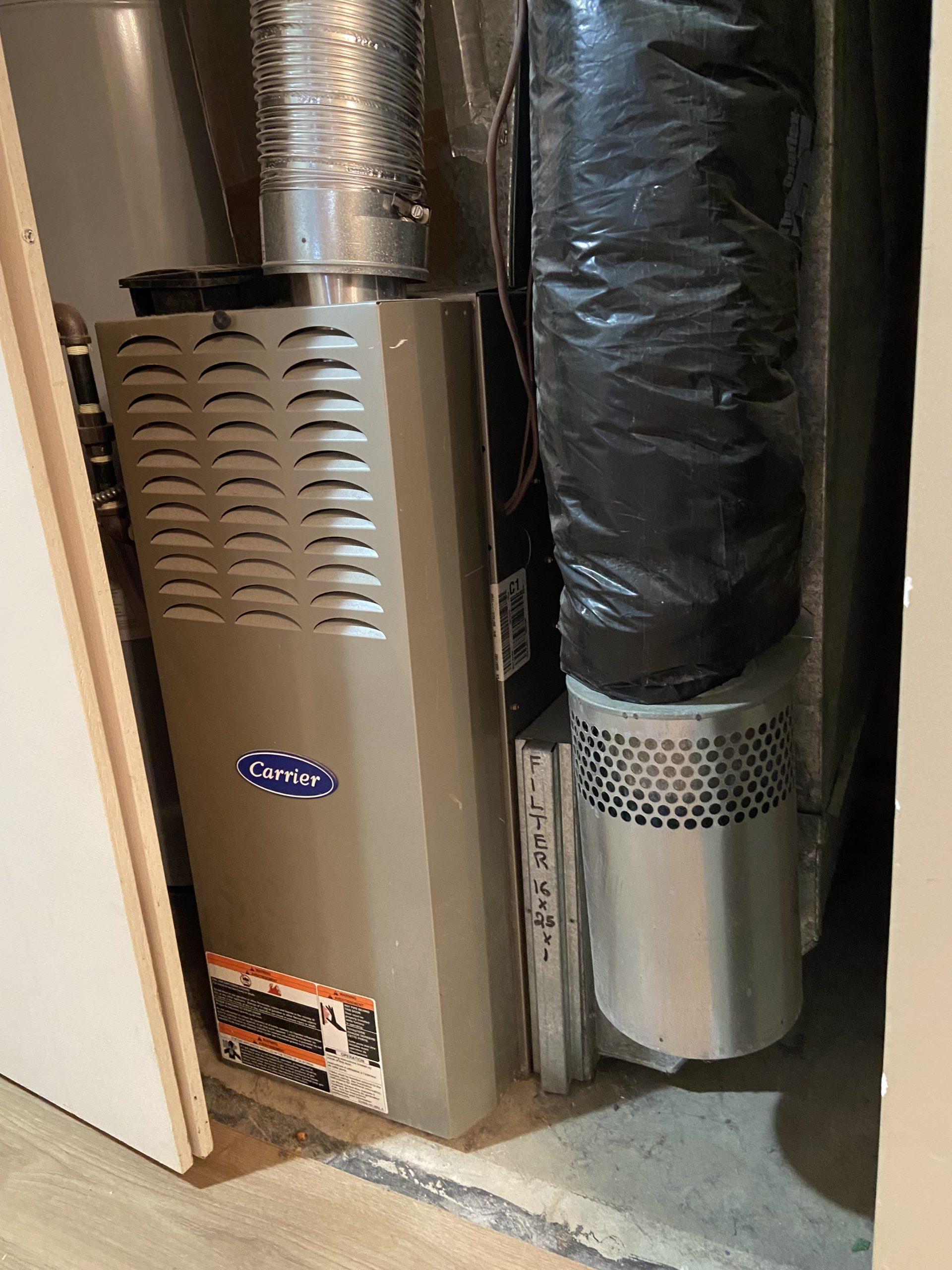
A clogged filter is one of the most common reasons a furnace stops heating properly. When airflow is
restricted, the furnace overheats and a safety switch, called the high-limit switch, shuts the burners off
to protect the equipment. The blower may keep running, but the air coming out of the vents turns cool.
Pull the filter out and hold it up to a light. If you cannot see light through it, replace it. Most 1-inch filters
should be changed every one to three months during the heating season. Homes with pets, renovations,
or a lot of dust may need changes more often.
After replacing a badly clogged filter, turn the furnace off at the switch for a few minutes, then back on.
This can reset the system and let it start a fresh heating cycle.
3. Look at the Exhaust and Intake Vents Outside
Most furnaces installed in Calgary homes over the past 25 years are high-efficiency models. They use
two white plastic pipes that run through an exterior wall: one brings in fresh air, and one carries exhaust
out. When heavy snow drifts, frost, or ice block either pipe, the furnace’s pressure switch prevents it
from running.
This is especially common after a big snowfall or during extreme cold, when moisture in the exhaust
freezes around the pipe opening. Go outside and check that both pipes are clear. Gently brush away
snow and ice by hand. Do not use a sharp tool that could crack the pipe.
While you are there, make sure nothing is stacked against the pipes, like snow cleared off the driveway
or stored items along the side of the house.
4. Watch for Warning Signs That Need a Professional
If the simple checks do not solve the problem, the cause is usually a component inside the furnace.
Common culprits include a dirty flame sensor, a failing hot-surface igniter, a worn inducer motor, or a
blocked condensate drain. These parts require proper testing and, in many cases, work on the gas
system.
Call a licensed technician right away if you notice any of the following:
- The furnace starts, then shuts off within a few minutes, over and over
- Loud banging, squealing, or grinding noises
- A yellow or flickering burner flame instead of a steady blue one
- Water pooling around the base of the furnace
- A smell of gas, or your carbon monoxide alarm sounding
If you smell gas or your CO alarm goes off, leave the house immediately and call ATCO’s emergency line
or 911 from outside. Do not try to restart the furnace.
- Repair or Replace? How to Decide
Most furnaces last 15 to 20 years. If yours is in that range and has needed several repairs in the past few
winters, it may be time to compare repair costs with a new unit. A few questions help guide the
decision:
- Age: Is the furnace older than 15 years?
- Repair history: Have you paid for repairs more than once in the last two years?
- Comfort: Are some rooms consistently colder than others?
- Operating costs: Have your gas bills crept up without a change in use?
- Safety: Has a technician noted rust or cracks on the heat exchanger?
If you answer yes to two or more, get a proper assessment. A new high-efficiency furnace, sized
correctly for your home, can run quieter, heat more evenly, and use less gas. Replacing a furnace in
Alberta requires a gas permit, so work with a licensed gas fitter who handles the paperwork.
- Keep Your Furnace Ready for the Next Cold Snap
The best way to avoid a mid-winter breakdown is an annual furnace tune-up in late summer or early fall.
A technician cleans the burners and flame sensor, tests the igniter and safety controls, checks venting
and gas pressure, and measures airflow. Many small problems are caught before they leave you without
heat.
Citadel Plumbing & Heating provides furnace repair, replacement, and maintenance for homeowners in
Calgary, Airdrie, Cochrane, Okotoks, Chestermere, and nearby communities. Frank is a licensed plumber
and gas fitter who gives clear, upfront quotes and honest advice on whether to repair or replace.
Furnace acting up? Call Citadel Plumbing & Heating at (587) 575-5661, Monday to Friday, 9 AM to 5 PM,
or visit our HVAC Services page.