If your home was built between the late 1970s and the late 1990s, there is a good chance it was
plumbed with Poly-B. Across Calgary, thousands of homes in neighbourhoods built during that period
still have it behind their walls and ceilings. For years it did its job without complaint. Today, it is one of
the most common reasons homeowners call a plumber for a full re-pipe.
This guide explains what Poly-B is, how to tell if your home has it, why it causes problems, and what
replacing it actually involves, so you can make a calm, informed decision.
- What Is Poly-B and How Do I Know If I Have It?
Poly-B is short for polybutylene, a flexible plastic pipe that was widely used for water supply lines
because it was inexpensive and quick to install. It was later removed from Canadian plumbing codes
after concerns about failures.
You can often spot Poly-B yourself. Look in these places:
- Near the water heater, where the hot and cold lines connect
- At the main water shut-off, usually in the basement
- Under kitchen and bathroom sinks, at the shut-off valves
- In unfinished basement ceilings, where pipes run between joists
Poly-B is usually grey, though some was blue or black. It is flexible, often with a dull finish, and is
commonly stamped with “PB2110.” Fittings may be plastic or metal crimp rings. Keep in mind that some
homes had Poly-B partially replaced, so seeing copper or PEX in one spot does not guarantee the rest of
the house is clear. A plumber can confirm what you have in a short visit.
- Why Poly-B Fails
The biggest concern with Poly-B is that it can fail without warning. Over time, chlorine and other
disinfectants in municipal water can react with the plastic, making it brittle from the inside. Small cracks
form that you cannot see from the outside. Eventually, a pipe or fitting gives way.
Failures are most common at the fittings, where the pipe connects to valves, elbows, or fixtures. Plastic
fittings used in early installations were especially prone to cracking. Other factors that increase the risk
include:
- High water pressure, especially without a working pressure-reducing valve
- Pipes installed near heat sources like the water heater or furnace
- Improperly crimped fittings from the original installation
- Age, since most Poly-B in Calgary is now 25 to 45 years old
A slow drip may give you some warning, but a split pipe can release a large amount of water quickly. In a
finished basement, that can mean damaged drywall, flooring, and belongings in a matter of hours.
- How Poly-B Affects Home Insurance and Resale
Poly-B is not only a plumbing concern. Many Canadian insurers treat it as a higher risk. Depending on
the company, homes with Poly-B may face higher premiums, limits on water damage coverage, or a
requirement to replace it before a policy is issued or renewed. Policies vary, so check directly with your
insurer or broker.
Poly-B can also come up when you sell. Home inspectors routinely flag it, and buyers may ask for a price
reduction or insist on replacement before closing. Replacing it ahead of time removes that negotiating
point and lets you present the home as updated.
If you do replace your Poly-B, keep the invoice and any documentation from your plumber. Insurers and
buyers often ask for proof that the work was completed. - What a Poly-B Re-Pipe Involves
Many homeowners picture a re-pipe as a messy, weeks-long project. In most homes, it is more
manageable than expected. Here is how a typical job works: - Assessment: The plumber inspects the home, maps where the existing lines run, and identifies
the best routes for new pipe. - Quote and plan: You receive a written quote that explains the materials, the number of wall and
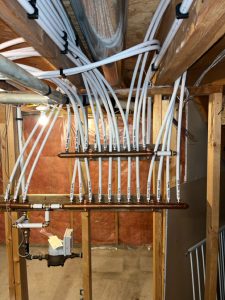
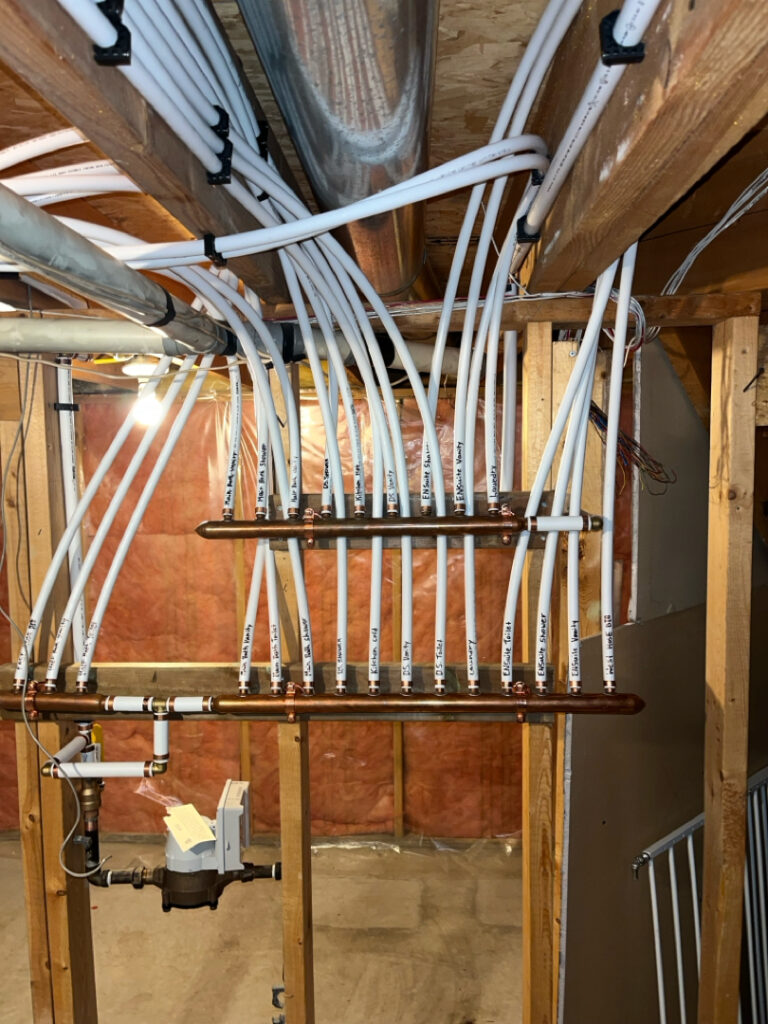
ceiling openings, and the schedule. - Installation: New PEX or copper lines are run to every fixture and appliance, with new shut-off
valves where needed. Water is usually restored at the end of each workday. - Testing: The new system is pressure tested to confirm there are no leaks.
- Reconnection and clean-up: Fixtures, the water heater, and appliances are reconnected, and
the work area is cleaned.
Most full Poly-B replacements in a typical Calgary home take between two and four working days,
depending on the size of the house and how much is finished. PEX is the most common replacement
material because it is durable, flexible, and allows fewer wall openings. Drywall patching and painting
are usually handled separately, so ask your plumber how openings will be left and whether they can
recommend a drywall contractor. - Should You Replace It Now?
If your Poly-B has not leaked yet, it can be tempting to wait. The problem is that failures rarely come
with a warning, and the cost of water damage, insurance deductibles, and disruption often exceeds the
cost of a planned re-pipe. Replacing it on your own schedule lets you choose the timing, compare
quotes, and coordinate with other projects, like a basement or bathroom renovation, when walls are
already open.
Citadel Plumbing & Heating replaces Poly-B for homeowners in Calgary, Airdrie, Cochrane, Okotoks,
Chestermere, and surrounding communities. Frank is a licensed plumber who plans each re-pipe to
minimize wall openings, keeps you updated throughout, and provides documentation you can share
with your insurer.
Think your home has Poly-B? Call Citadel Plumbing & Heating at (587) 575-5661, Monday to Friday, 9
AM to 5 PM, for an inspection and free quote, or visit our Plumbing Services page.